
Keeping Anti-Racism on the Table: Liz Pemberton in Conversation with Dr Shaddai Tembo
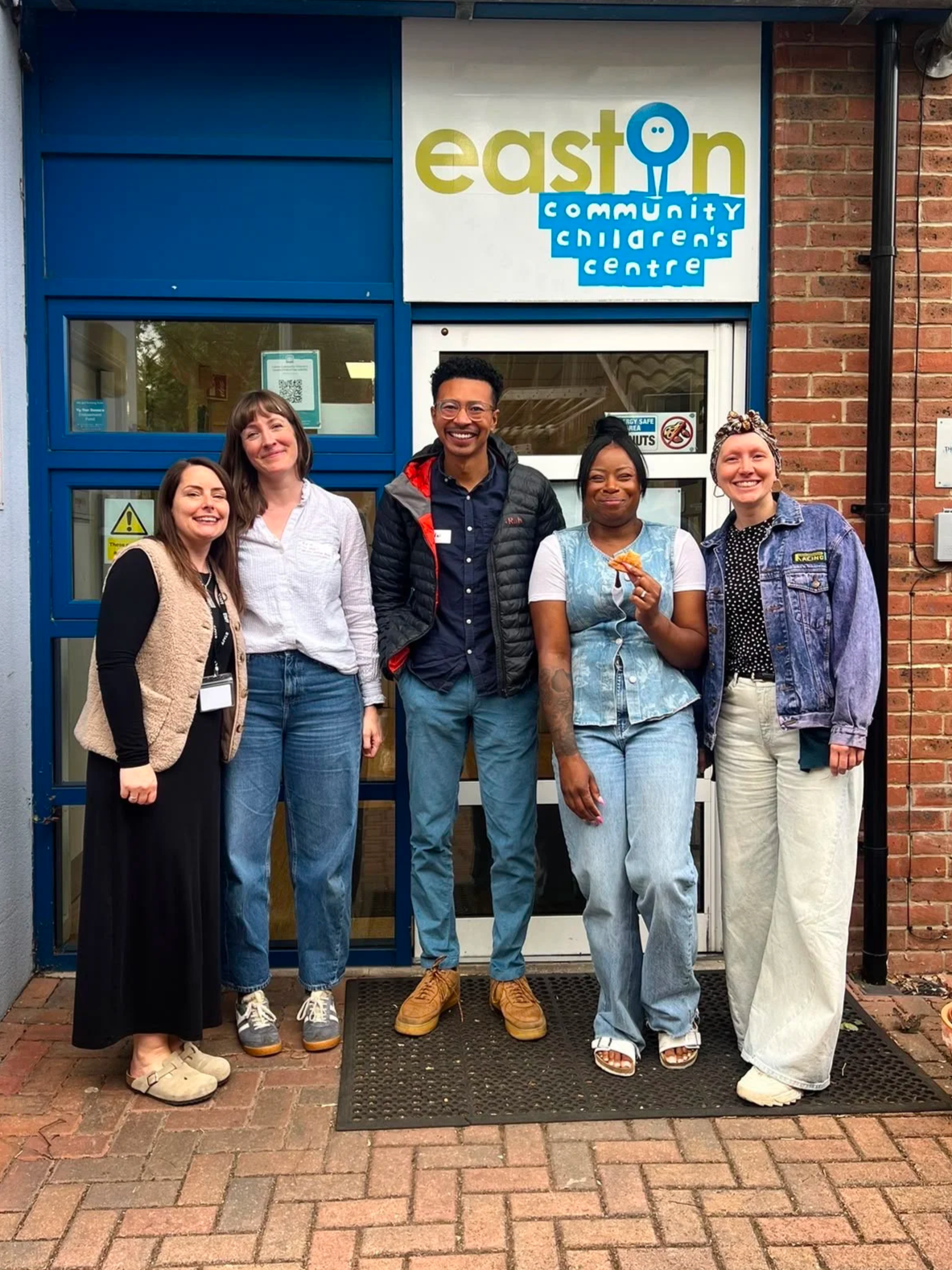
Written by the Bristol Early Years Forum for Anti-Racist Practice and Liz Pemberton
16 June 2026
Please note this is a long read! We wanted to honour the quality and depth of the conversation with Liz, alongside the contributions from those in the room, and to keep space for the detail, feeling, and questions that emerged throughout the event.
In June 2026, the Bristol Early Years Forum for Anti-Racist Practice (BEYFARP) hosted an in-conversation event with Liz Pemberton, The Black Nursery Manager, and Dr Shaddai Tembo, Critical Early Years. This event brought together early years colleagues from across Bristol to think about anti-racism, practice, activism, safeguarding and the wider political climate in England.
For the forum, this felt like a full-circle moment. BEYFARP was established after Erin, Izzy and Beth attended anti-racism training delivered by Liz in 2020. That training became part of the spark for what later developed into the forum: a grassroots space where early years practitioners could stay with anti-racism through reflection, conversation and action.
That return matters because although training can open a door to the issue, we’ve learned that sustained practice needs something more relational, perhaps more embodied. The forum was built to help keep these conversations alive after the training ends, after the news cycle moves on, and after the initial urgency fades. This event was part of that same commitment.
At the start of the conversation, we said that the intention was for people to take the learning back into practice and return to the forum to continue the discussion. We asked colleagues in the room to consider what anti-racism might look like in their own contexts and how they might make a difference “on Monday,” when they were back with the young children in their care. That was important to us because although anti-racism can sound large, sometimes abstract and distant, it has to become close, daily and practical.
The conversation between Shaddai and Liz was deliberately informal. We had a loose sense that we might look back, think about where we are now, and look ahead. What followed was a rich discussion about how we arrive at anti-racist work, what the work asks of us, and what hope might look like in a difficult political moment.
Liz’s thoughts on accepting the invitation
When Shaddai first approached me about the event, he had said that it would be online. I immediately came back with the offer of an in-person event because, over the years of doing this work, and particularly because I set up my business during the COVID lockdown, I had missed being WITH people in this way.
This did come with its limitations too, though - I recognised that things around childcare and accessibility may have prevented physical attendance for some, so providing this follow-up article for people to read (a brilliant suggestion by Shaddai) will hopefully bridge that gap.
I had been aware of the work of BEYFARP through my conversations with Shaddai and updates on social media, and I had delivered online anti-racism training sessions for Erin and her nursery team back in 2020. This is to say that there was a level of familiarity with the group's commitment to anti-racist practice over the years, and that was important for me to know. I have become increasingly aware, particularly since becoming a mother, that my priorities regarding work have significantly changed, and I am even more conscious about where I put my energy.
How we arrive at this work
Shaddai began by asking Liz about her early years story because it felt important to start with how people arrive at anti-racist practice. For some practitioners, anti/racism becomes visible through a training session, a conversation, a book, an event, or a transformational moment. For others, this may well have been built into their upbringing even before they had the words to articulate it as such. Liz’s roots were familial and woven into the life of the nursery her mother opened in Birmingham in 1987:
I guess when I think about anti-racism and anti-racist practice, it’s part and parcel of who I am, who she is, who the family are and how they operate.
Liz was describing anti-racism as an inheritance, an orientation and a practice. It was present in how the nursery was run, how families were welcomed, how decisions were made, and how her mother moved through professional spaces as a Black woman leading in early years. A powerful moment here came when Liz spoke about her mother’s refusal to stay quiet:
Anybody that knows my mum in Birmingham, she is renowned because she is somebody who does not shut up. And I used to wonder why she didn’t just stay quiet in meetings and don’t say that to that person and this person works for the local authority. She was like, no, Elizabeth, everybody’s going to get it. And I’m going to go into this meeting and see what’s going to happen.
There is something important about how activism is learned. Liz was describing the discomfort of watching someone speak up in spaces where silence might have seemed safer. Reflecting after the event, Liz named the racialised dynamics informing this memory in which her mother’s presence in those meetings was affected by several forms of power at once: the local authority, professional hierarchies, whiteness, gendered expectations of respectability, and the racialised scrutiny directed towards dark-skinned Black women who speak up. The figures of the “angry”, “scary” or “intimidating” Black woman were already available within those spaces as ways of interpreting her mother’s challenge. Liz’s recollection carries the complexity of watching this as a child: the pride of seeing her mother refuse containment, the discomfort of sensing what that refusal might cost, and the early ways of knowing who can truly speak and whose advocacy is read as a threat.
Over time, that discomfort became a lesson in advocacy. Speaking up was part of protecting the community, the children, the families and the nursery’s right to exist on its own terms. Liz continued:
As I grew watching that and observing that, actually I thought about the role of activism, what it means to be an advocate for your community, for the children and families that you’re serving, but also for your right to exist as a Black nursery manager. So, I guess that’s where it made me start thinking about how can I be not only an advocate for myself, for the children and families, but also for the rights of children and particularly in Birmingham where the nursery was located for Black children. And I thought about what that kind of translated into for everyday practice.
This passage captures much of what BEYFARP is trying to hold onto: that anti-racist practice is conceptual and emotional, yet it also has to translate into the decisions we make every single day. It is in how practitioners speak in meetings, how they challenge wider processes, how they respond to families, how they understand children’s rights, and how they refuse narrow models of what “good” early years practice is supposed to look like.
Liz’s story reminds us that people do not arrive into anti-racist work from the same place. Some inherit it. Some are pushed into it by events. Some come to it through discomfort, guilt, curiosity, anger, love or professional responsibility. The question for all of us is what we do once we recognise that injustice surrounds us, and much of our existing practice around equality, diversity and inclusion might not go far enough.
What anti-racism asks of us
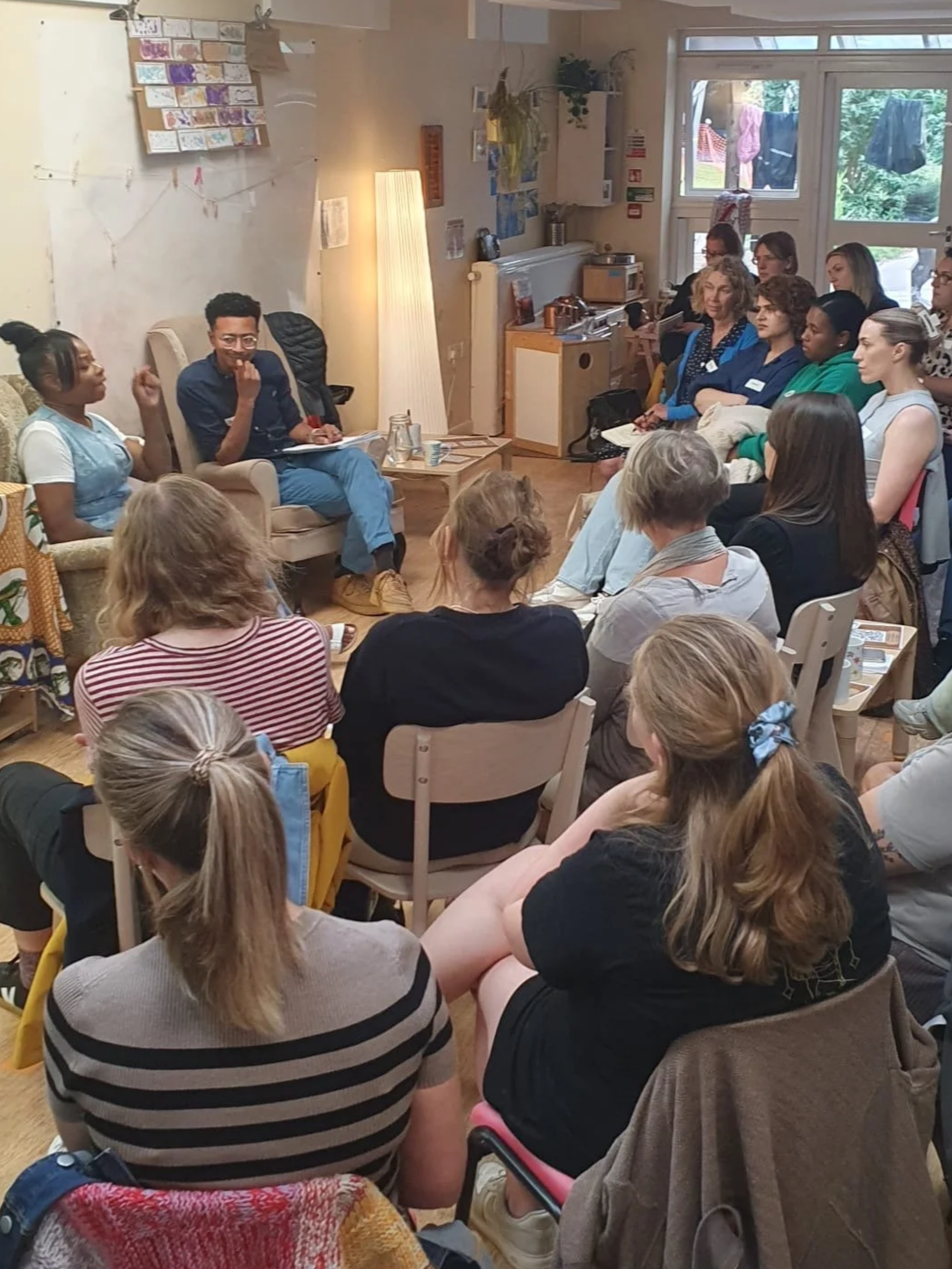
Shaddai then asked what this work is actually about since anti-racism is sometimes flattened into resources, representation or one-off activities. Those things are important, yet Liz’s response pushed us toward anti-racism as a stance and a form of collective resistance:
It’s really important to understand the wider thing. Racism is not new. Remember at that time (in 2020) when people were kind of sharing memes and it was like, racism isn’t new, the cameras are new. We’re just now able to see it … An anti-approach, so if you are anti-oppressive in your approach, if you are anti-racist in your approach, if you’re anti-fascist, you’re pushing back against something.
When you’re looking at the ways in which we are anti-racist in our practice, not just in our day-to-day early years practice, but in our lived experience practice, it is to say, I guess, and to express that this work around being anti never stops. But it requires the effort of everybody. And it requires a buy-in, if you like, and a commitment from everybody in this room and outside of this room.
You don’t have to share in my racialised identity or my lived experience or my understanding of things to push back against. Anti is something for us all to be. It’s not derogatory, it’s not a deficit, it’s not negative. It is important to be woke, to be anti, to say no, to approach things with and through a critical lens, to ask hard questions.
And also to know, you will know it’s a hard question because you’ll feel nervous about it. If you don’t feel nervous, that’s not hard. If you don’t feel scared, that’s not hard. That’s easy. You need to get to a point where you are actually trembling inside, that you’re worried, right? And still ask the question anyway, or still critically approach this with an idea of what kind of response you’d like.
To be anti-anything is to push back against the system which is designed to keep us all in order.
There’s a way in which we can all do this because we’re all coming to it from and through different lenses and experiences. We all have our ways, but we must. That’s the thing. And I think now in society, we are seeing the reason why we must. All of us. It’s a collective.
For Shaddai, this raised the central issue of the event: anti-racist early years practice cannot be separated from the political conditions in which children, families and communities are living. He said:
What I’m hearing through your conversation is the political nature of this work, and that’s something that just can’t be avoided. As much as we’re working directly with children, we’re also working with families, communities, and therefore we’re working with society.
Within our settings, we have such a big responsibility to support those communities within what is quite a politically divisive climate at the moment. Even if we in the room here agree on the need to do this work, I suspect you’ll go back to your settings on Monday or Tuesday, you might have conversations with colleagues who might not feel the need to do this work. They might think it’s too political. They might want to avoid those conversations.
What can people who want to be involved, who want to be engaged in activism around this, have those conversations with colleagues who perhaps are more resistant?
Liz’s response was direct:
I think there is a need to kind of widen and deepen our understanding about what is politicisation. Everything is political. The number of children that you can have to one member of staff is political. It’s set by policies; it’s set by government. Ideas of who can access what, through and within what hours in an early years setting, is political.
“The ideas that we inhabit and that we are embedded and wedded to in our early years space, everything is political. So, I think if somebody comes to you with an argument of, ‘Oh, race and racism, it’s too political’, your opener is: everything is political.
“And as I always think, if you don’t do politics, politics is going to do you. Whether you like it or not, whether you don’t want to talk about it, whether you want to keep your ears closed and your eyes closed, you are existing within a political framework. And this is whether you are on the right or the left or somewhere in the middle. Because even the ways in which we talk about politics is very divisive.
Liz’s challenge is that politics is already there. It is in who gets access to provision, who is made to feel safe, who is understood, who is judged, and who is asked to adapt. For the forum, this is one of the reasons anti-racism must stay on the table. It is part of the routine work of supporting children and families in the world as it is, while also working collectively toward the world as it should be.
Hope, return and the work still happening
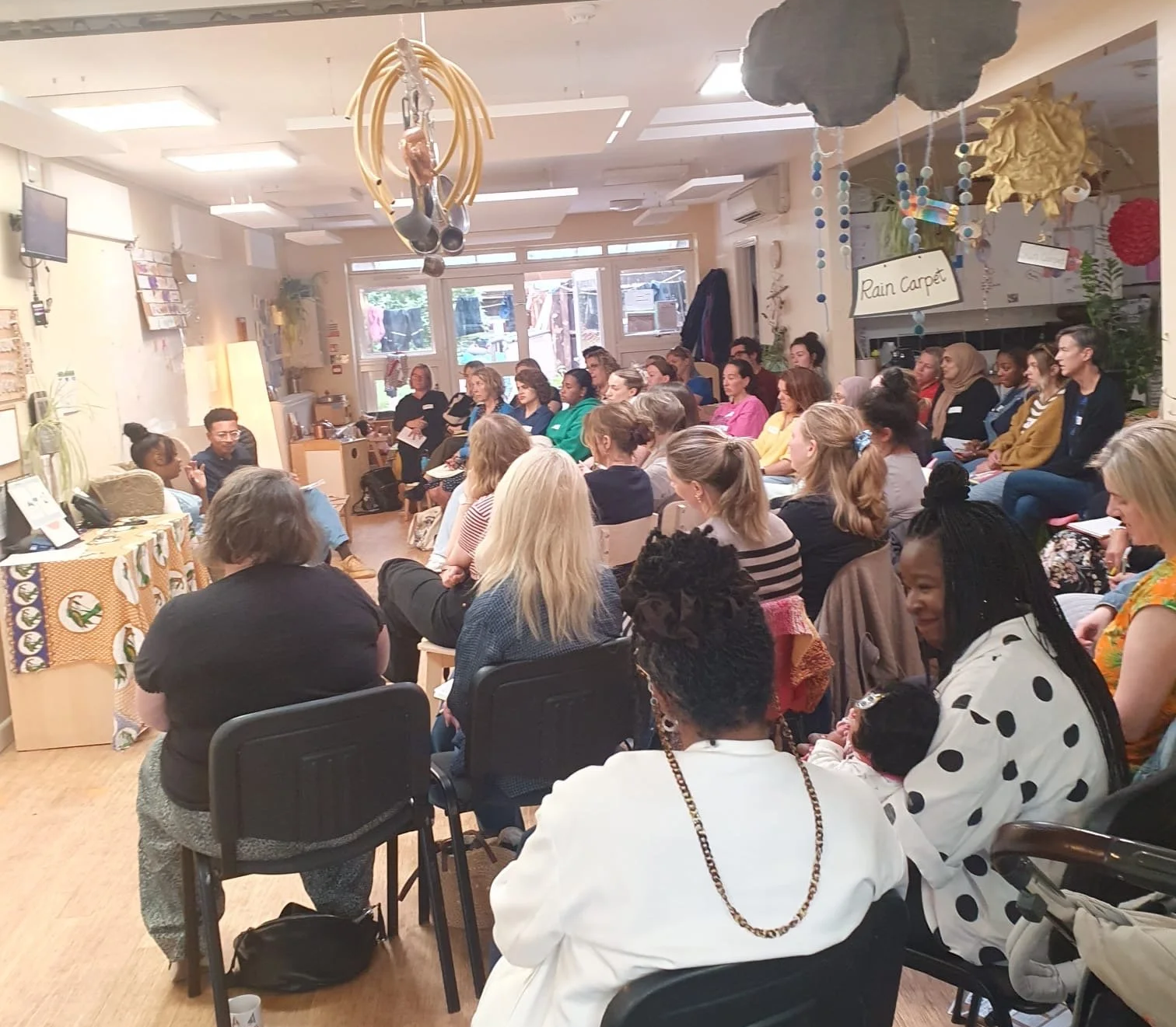
So much of this work involves naming harm, resistance, fatigue and the wider systems that shape children’s lives. At the same time, the forum is built on the belief that people can return, reflect, act and keep going. Shaddai asked:
I suppose I’m thinking about success and positivity and hope. What have you learned that’s given you hope over the past six years? Do you think we’re moving in a positive direction? How hopeful are you for practice now and perhaps in the future?
Liz’s answer began with people who keep returning to the work. Hope, in this framing, is measured through continued connection, conversation and commitment:
My hope lies in the people who keep on coming back, in that they keep on connecting with me, they keep on having conversations with me, they keep on engaging with me in terms of work and practice.
They keep on wanting to think and share with me their ideas about how to be better or how to improve, or where their journey started and where their journeys are now.
And when I say ‘they’, I’m talking about everybody. This is including everybody irrespective of their racialised identity, because I often sometimes think this work is couched as, like, Black people are good, we’re just trying to help white people be better. And I think it’s a reductive way of looking at anti-racist practice because we know that our communities are so much more enriched by every kind of person and how and where their identities intersect and overlap.
I think when we’re looking at hope, for me, it is about being able to look at and measure, I guess, how many times people are coming back to me or engaging with the services of The Black Nursery Manager. When I see where I see Shaddai doing work and other colleagues that are in this space, where and how I see him engaging in the way that he’s engaging, and who’s engaging with him, even if they’re not necessarily engaging with me.
Hope here is practice. It is repetition. It is people showing up, after a difficult conversation, after a moment of discomfort, after the initial urgency has faded. It is also collective. Liz’s response resisted the idea that anti-racist work belongs to any one person, racial identity or professional role. Shaddai then reflected on what gives him hope in the context of the forum itself:
I think what gives me hope is people in this room here. I have to shout out Izzy, Erin and Beth for developing the forum and coming together as white people and engaging in this work and doing it.
We can wait all we want for the policy to come, but it’s going to take a long time. I don’t think it’ll be what we want. So having those conversations in our communities, developing those grassroots networks, doing the work when no one’s looking, when it’s not on the news, when it’s not in the media cycle, that for me is what gives me hope.
And I still see and hear lots of really positive stories about nurseries up and down the country who are keen to do this. Constrained, of course. This is difficult. We all probably work full time, busy hours. We all understand the difficulties of working with young children and, at the same time, we understand the fundamental need to do that work.
So people coming together like this, I think for me, is really important and hopefully we can keep those conversations going through the forum going forward.
This is the core purpose of the forum: to create a place where people keep coming back. The work does need policy, funding, leadership and structural change. It also needs rooms like this one, where practitioners can gather, think, ask questions, hear each other, and return to their settings with renewed courage.
Selected Themes from the room
From there, the conversation opened to the room. The Q&A reflected the richness of the forum itself, moving between the minute details of practice and the wider structures shaping early childhood provision.
Liz also invited us to think about what this work looks like for each of us in the room, including what it means for her to do this work as a Black woman and similarly what it means for Black men doing this work.
For Shaddai, reflecting after the event, this was a useful provocation that raises attentiveness to positionality. As a Black man in early years, he is located in the intersections of patriarchy, racialisation, academic authority, and a profession historically imagined through white femininity. At times, gender and professional status may give his words additional weight; at other times, Black male presence in early years can be marked as unusual, visible or out of place. His responsibility is to practise power-with: to use his position to open space for others and remain present to the tensions of anti-racist work.
Izzy later reflected on Liz’s presence in the room and the effect this had on those listening. Liz described two moments that stayed with her: a Muslim educator thanking Liz for the explicitness of her framing and style, and a group of Black women gathering around Liz at the end of the session. For Izzy, these moments showed how much it matters to feel witnessed by people who understand the work from lived experience. Liz’s talk seemed to give people renewed energy, particularly those already carrying anti-racist work in their own settings and communities.
One question asked about positive examples of change and pushback. Liz spoke about work with Barnardo’s and the importance of larger organisations choosing to invest in anti-racist early years resources. Shaddai also shared some of his current work with City of Sanctuary, including nurseries and schools in Bristol responding to anti-migrant and far-right rhetoric. One example is a nursery led by Millie Colwey (name shared with consent) where England flags had appeared along the street. Children noticed them and asked questions. The nursery could have avoided the conversation. Instead, the manager spoke with children, parents and the wider community, and the children went on to create their own flag for their setting. This is the kind of practice that takes the wider political context seriously while staying close to children’s experiences.
A contribution from Izzy brought us back to practice: auditing books, noticing representation in resources, and challenging paperwork sent to families when it reproduces whiteness as the norm. This was again a helpful reminder that anti-racism lives in both the big and small things. It is in policy and picture books, in public discourse and in the forms sent home before a child starts school.
We also discussed early years practitioners as activists. A colleague referenced the idea of teaching as a subversive activity. Shaddai shared a thought from a colleague: people who work in early years are often natural activists because they come into the work wanting to make a difference. This does not mean every practitioner will use the word activist. It does suggest that advocacy is already part of the profession. Anti-racism asks us to make that advocacy more conscious, more explicit and more courageous.
A particularly important question asked whether racism should be understood as a safeguarding issue. Liz’s answer was immediate:
It absolutely should be. It has to be.
She argued that racism, Islamophobia, antisemitism, anti-Blackness and other forms of racialised harm affect children’s safety, identity, belonging and wellbeing. This requires policy, training and confidence. Practitioners are trained to scan for neglect and abuse; they also need language and tools to recognise racialised harm.
Another contribution concerned Black boys with SEND being moved on from other settings after those settings said they could not meet their needs. The practitioner described a pattern that felt impossible to dismiss. Liz linked this to longer histories of Black children being excluded, pathologised and misread. She encouraged practitioners to collect data where they notice patterns, because systems often dismiss stories until they are presented as evidence.
We then reflected on the mixed economy of early years provision. Maintained nursery schools often become the places that support children with the highest levels of need, while operating with inadequate funding and increasing pressure. This is another way the politics of early years becomes visible. Who gets to refuse? Who becomes the last bastion? Who carries the responsibility when the system fails children?
The final question asked Liz what she looked for when choosing early years provision for her own son. Her answer returned us to relationships, openness and trust. She wanted a setting that celebrated her son fully, engaged honestly with race, welcomed difficult conversations and responded to concerns without defensiveness. In many ways, this brought the event back to the heart of anti-racist early years practice: children and families need to be able to arrive as their full selves.
Follow up thoughts from Liz
I stepped away from the event feeling energised, emotional and proud of myself. Having the conversation hosted by Shaddai made me feel very safe to express myself in the way that I did because of our existing relationship. There was an unhurriedness about the pace of his questioning and that aided my ability to think and consider how I answered. I reflected afterwards about how the audience were so locked in and appreciated my honesty - lots of head nods of agreement and eye contact whilst I spoke. That kind of engagement is not always a given in this work, and I never take it for granted particularly when the room is predominantly white. Naming those things is important to me - who is in the audience matters when it comes to conversations about race and my positionality as a Black woman in these spaces is something I have thought about a lot throughout the duration of this work.
There is a tightrope that I walk, and it is about expectation. An expectation from a predominantly white audience, predominantly women, that I am there to give all the answers or to coddle them and prioritise their comfort or give them an “ally cookie” (a favourite term my friend David Cahn introduced me to) for turning up. The history of anti-racist work and perhaps activism more generally has seen a pattern of Black women being tokenised and/or having their knowledge extracted whilst simultaneously being abused, dismissed and erased. The labour is extracted from the most marginalised and those who take the glory are the furthest away from the harm. I take great care to be cognisant of this in every space that I move in. As my work continues to grow, I hope to be able to visit more places up and down the country as well as honouring more work internationally because the learning never stops.
What the forum will take forward
We felt inspired by the enthusiasm and dedication to the work that was palpable in the room. Sometimes these spaces can feel like there is a need from people to prove they are doing enough, whilst explaining what makes some aspects impossible, rather than sharing in the vulnerability of struggling with this work. It felt so important to share this space with those who are all committed to learning and staying in the discomfort.
Active anti-racism can be isolating if you feel like you are the one pushing an agenda that others don’t fully get, but developing networks like this for support can be the boost we need to keep going. We really appreciated the challenge from Liz, that if you are not feeling the fear, you’re not doing the work. It is a reminder to be bold and be brave as a collective that actively pushes forward against systems that oppress us all.
We left encouraged that we are not on a solo mission but part of a sector that cares what is happening and not willing to be bystanders. The attention to the political nature of early years highlights structures as a value decision that may be critically interpreted or negotiated. We have agency to make a difference in our contexts that impact people’s lives and that is a responsibility we want to take seriously.
To stay connected with the Bristol Early Years Forum for Anti-Racist Practice, including future events and opportunities to take part, please check out our website and sign up to our newsletter: https://www.bristolearlyyearsforumforanti-racistpractice.co.uk/