
Note #5
These Notes are my space for thinking-in-public. They sit somewhere between reflection, theory and practice, often beginning with questions that emerge through my work in early childhood, social justice and education more broadly. Some are grounded in practice. Others wander through books and ideas that have stayed with me. This one does a little of both!
On Aberrance
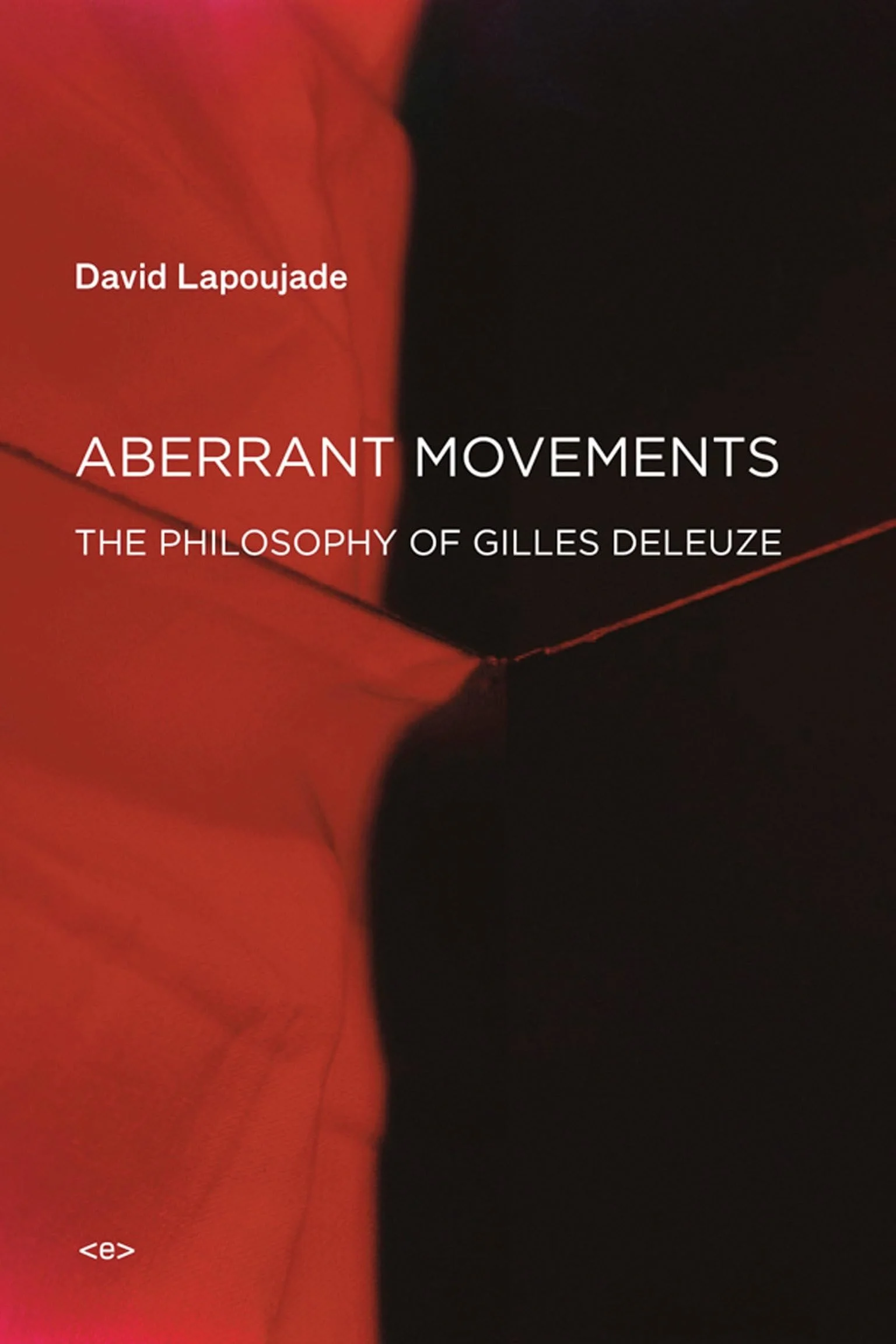
One philosophy book that has stayed with me for some time now is Aberrant Movements: The Philosophy of Gilles Deleuze by David Lapoujade. It is admittedly niche and, at times, quite abstract, but the ideas it raised when I first read it have had a lingering effect on my thinking.
Much of my work on social justice, anti-racism and equality concerns the recognition of wider systems of constraint and how they shape the conditions of our lives. These constraints may operate at structural levels through institutions, social arrangements, and relations of power, or at more intimate levels through identity, stereotypes, expectations, and habits.
The language of constraint may not immediately resonate with everyone. For many people, it may even feel inaccurate. We live in societies that routinely celebrate freedom, agency and choice. We are encouraged to understand ourselves as individuals who make decisions, pursue preferences and shape our own futures. From consumer culture to career planning to self-improvement discourse, freedom is often imagined as the capacity to choose between available options and act according to our personal intentions.
This understanding is so familiar that it can begin to feel axiomatic. Common sense. To question it can seem strangely unnecessary, perhaps even pessimistic. Surely, we choose what we want, decide who we are, and act accordingly?
Yet philosophers have long questioned whether human action works in such a straightforward way. I remember first encountering these questions while reading around what is often described as Libet’s ‘missing half-second’ , an idea that influenced a lot of thinking in my PhD. Libet was interested in a deceptively simple question: when do we become conscious of deciding to act?
His experiments asked participants to make small voluntary movements, such as flexing a wrist, while monitoring brain activity and recording the moment participants became aware of their intention to move. His findings suggested that measurable neural activity associated with movement began shortly before participants reported becoming consciously aware of deciding.
In other words, the body appeared to begin preparing for action before participants consciously experienced themselves as having decided.
This way of thinking raises wider questions about how we encounter the world. Smells, sounds, atmospheres and bodily encounters matter. We respond through flushes of heat, tension, proximity, attraction, unease and the subtle impulses bodies pick up from one another.
Experience gathers through feeling as much as thought. Colebrook (2002) illustrates this through the example of watching a tense scene in a film. Our hearts begin to race, our muscles tighten and our bodies react before we have fully interpreted what is unfolding. As she observes, “before [we] even think or conceptualise there is an element of response that is prior to any decision”.
If experience is already unfolding around us in the half-second before we become conscious of it, how do we understand constraint, freedom and aberrant movement?
The truth is that we inherit worlds before we fully understand them. Norms, expectations and atmospheres settle around us long before they become objects of reflection. As Lapoujade (2017) writes, “we can choose, but we cannot choose the terms of the choice”.
This does not mean that we lack freedom altogether. Massumi is careful about this point. Discussions of Libet’s ‘missing half-second’ are sometimes interpreted as though they prove that freedom is an illusion. Yet we are shaped by histories, environments and encounters that precede us without these conditions sealing life shut.
Constraints shape us, and they also become the conditions through which something unexpected may emerge.
This is perhaps where I return to the idea of aberrance.
I use the term carefully. In ordinary usage, *aberrance* refers to deviation or departure from what is usual, expected or considered normal. The word often carries uncomfortable associations with deviance, disorder or abnormality. That is not quite what I mean here. I am interested less in aberrance as identity and more in aberrance as movement.
For Lapoujade, aberrant movements roam, veer and exceed the routes already laid out for them. They depart from established coordinates and introduce variation into what had seemed settled or predictable. Sometimes these departures are dramatic. Often, they are small and easily missed.
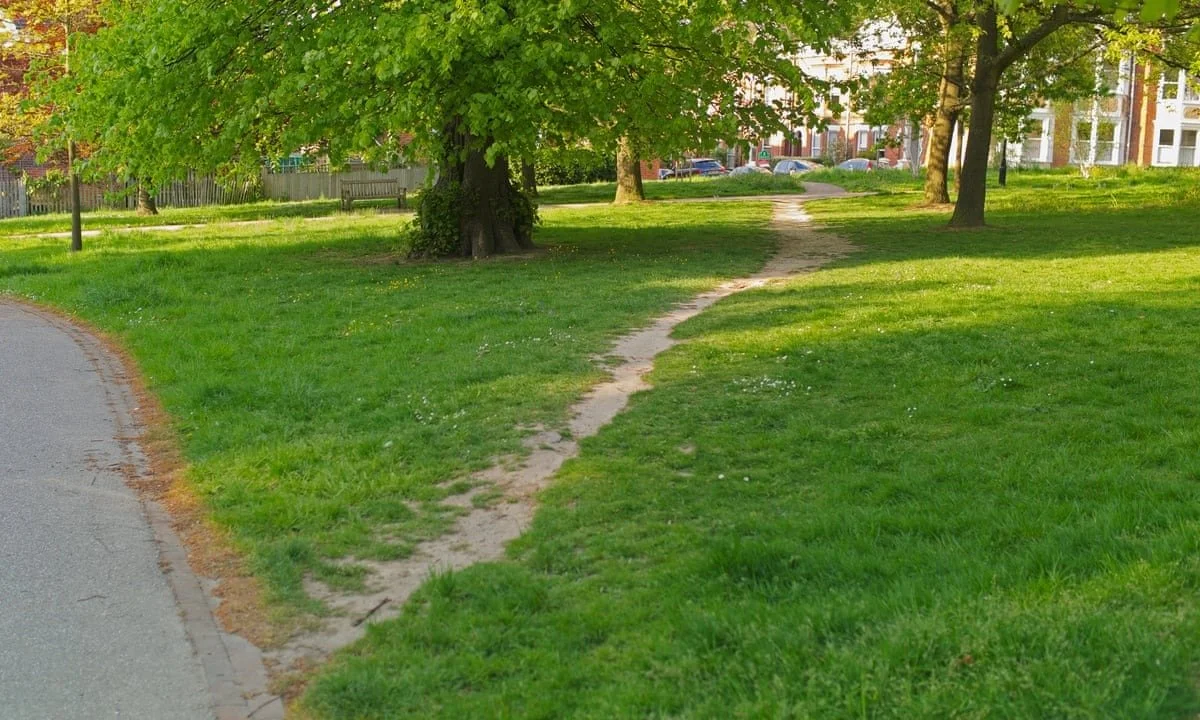
Desire paths are a good physical example: the unofficial routes worn across grass or through space where lived movement departs from planned design.
This way of thinking offers a language for understanding how social life remains mobile, even within conditions that shape and constrain us. Encounters interrupt. Relations shift. Something unexpected enters the situation. Perhaps nowhere is this more visible than in childhood.
Young children are aberrant.
They wander, they are wayward, they resist, they are out-of-sync, they misuse objects, reinvent rules and ask inconvenient questions. They become fascinated with what we adults overlook and remain indifferent to what we insist matters. They repeat, refuse, drift and surprise. Anyone who has spent time with young children will recognise these qualities.
This is not to suggest that children exist outside culture or social life. They inherit norms and expectations as much as adults do. Yet childhood often reveals how incomplete these processes of organisation really are.
Children do not move neatly through the pathways prepared for them, whether these pathways are spatial, social or conceptual. They pause, double back, become absorbed elsewhere and create lines of movement that do not always align with adult intention.
Massumi elsewhere writes of the “life-crushing weight of the imperative to conform”. Children encounter this imperative early. They learn how to belong, what counts and what kinds of life feel intelligible or available.
Sometimes this occurs through the language of free play itself. Even within supposedly free spaces, children learn what kinds of play are welcomed or rewarded, while other forms of movement or expression may be corrected, disciplined or punished. This brings us back to constraint.
We do not begin from nowhere. We inherit worlds already underway. And yet life continues to wander within them. Movements emerge, relations shift and unexpected trajectories take shape.
This is why aberrance feels worth celebrating, as those moments when play wanders from the pathways prepared for it.
Small departures. Unexpected solidarities. Ways of being and becoming that challenge, however briefly, the imperative to conform and to unsettle constraints imposed upon us.
Sometimes these movements fade. Sometimes they linger, sediment, and become part of how cultures shift.
And sometimes, perhaps, they become the beginnings of new habits and possibilities…
Works cited
Colebrook, C. (2002) Gilles Deleuze. London: Routledge.
Lapoujade, D. (2017) Aberrant Movements: The Philosophy of Gilles Deleuze. California: Semiotext(e).
Massumi, B. (2014) What Animals Teach Us about Politics. Durham: Duke University Press.
Massumi, B. (2015) Politics of Affect. Cambridge: Polity Press.
Tembo, S. (2022) Affective Sociomaterialisation: An Inquiry into Early Childhood Subjectivities within Outdoor Early Childhood Provision in Scotland, UK., University of the West of Scotland [Online].